

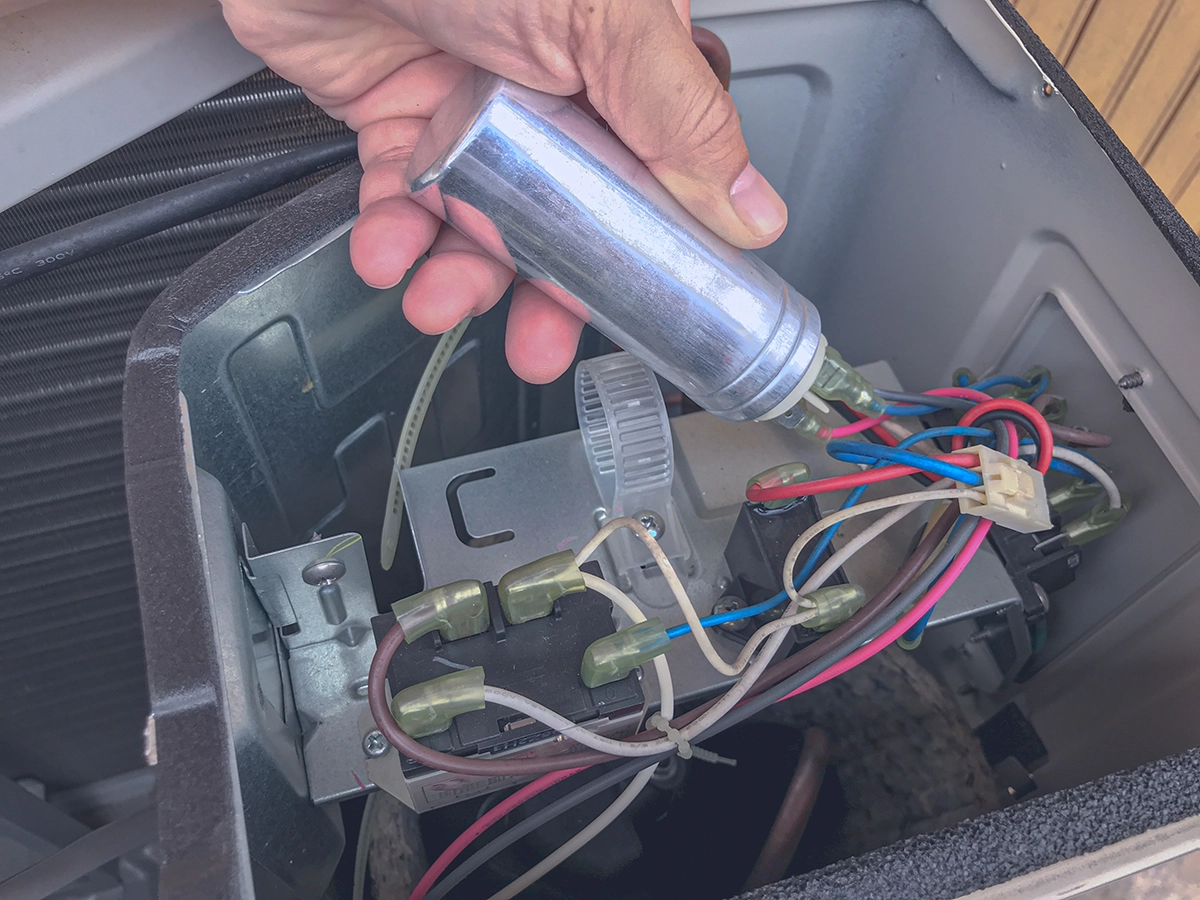
Is your AC compressor capacitor swollen and not holding charge in Maize, and you’re wondering what that means for your cooling system? A swollen or bulging capacitor is one of the clearest warning signs that this critical component has failed or is about to fail. That means your air conditioner can’t start properly or may not run at all. The capacitor stores and releases electrical energy to help your compressor motor get started and keep running smoothly throughout each cooling cycle. When it swells, that’s a visible sign of internal damage — usually from heat, age, or electrical stress. It can no longer hold the charge your system needs. Because a failed capacitor leaves your AC struggling or completely unable to cool your home, especially during Maize’s hot summer months, it’s important to act fast. Have a licensed technician diagnose and replace it quickly to restore your comfort and prevent further damage to the compressor itself.
What a Swollen Capacitor Means for Your AC
Your air conditioner’s capacitor is a small but critical component. It stores and releases electrical energy to help the compressor and fan motors start and run efficiently. When a swollen or bulging capacitor appears in your outdoor unit, it’s a clear warning sign that the part has failed or is on the verge of failure. In fact, capacitor swelling occurs when internal electrolyte or dielectric material degrades, causing gases to form and expand inside the casing. This physical distortion means the capacitor can no longer hold or deliver the electrical charge your compressor needs to operate.
For authoritative guidance, consult Swollen AC Capacitor: Why It Happens and How to Fix.
A swollen capacitor that’s not holding charge leaves your AC compressor struggling to start or unable to run at all. You might hear a humming or clicking sound as the system tries repeatedly to engage. Alternatively, your unit may shut down completely on hot days when you need it most. Beyond the immediate loss of cooling, a failing capacitor can force other components—like the compressor itself—to work harder. That risks expensive secondary damage if the issue isn’t addressed quickly.
When we respond to a call about an AC compressor capacitor swollen and not holding charge in Maize, our licensed technicians first shut off power to the unit. Then we verify the failure and inspect surrounding wiring and the compressor for signs of stress. We’ll replace the failed capacitor with the correct rated part and verify your system starts smoothly. If you notice a bulging component near your outdoor unit, contact us right away. Continuing to run the system can turn a straightforward capacitor replacement into a much larger repair.
Signs Your AC Compressor Capacitor Is Failing
When your air conditioner stops cooling your Maize home properly, the capacitor may be to blame. This small cylindrical component stores and releases electrical energy to start the compressor motor. AC capacitors fail primarily due to age, heat, electrical stress, and normal wear from repeated charging cycles. Recognizing the warning signs early can help you avoid a complete system breakdown during the hottest days of summer.
The most obvious visual clue is a swollen or bulging capacitor. If the top of the capacitor appears domed rather than flat, it’s no longer holding a proper charge and needs immediate replacement. You might also hear a clicking or humming sound when the system tries to start but the compressor never kicks on. Other symptoms include the outdoor fan running while the compressor stays silent. Your system may also cycle on and off more frequently than normal. Inside your home, you’ll notice warm air from the vents and rising temperatures despite the thermostat setting. Homeowners across Maize frequently encounter these issues when their AC compressor capacitor swollen and not holding charge in Maize becomes the root cause of cooling failures.
If you notice any of these signs, turn off your system to prevent further damage. Then contact our licensed technicians for a professional diagnosis and repair.
Why Capacitors Swell and Stop Holding Charge
When you notice your AC compressor capacitor is swollen and not holding charge in Maize, several common culprits are usually at work. Capacitors are among the hardest-working electrical components in your air conditioning system. They’re vulnerable to both environmental stress and electrical overload. Understanding what causes them to fail helps you recognize the warning signs early and call for professional help before a complete breakdown occurs.
Heat is the most frequent killer of capacitors. During Maize summers, the outdoor unit operates in direct sunlight for hours on end. The capacitor sits inside that metal cabinet absorbing ambient heat. Over time, excessive heat degrades the dielectric material inside the capacitor—the insulating layer that allows it to store electrical charge. As this material breaks down, the capacitor swells visibly at the top or sides. Its ability to hold voltage (capacitance) drops below the range your compressor needs to start and run efficiently.
Age compounds the problem. Most capacitors are rated for five to ten years under normal conditions. However, sustained high temperatures in an uncovered outdoor unit can shorten that lifespan significantly. Many Maize homeowners discover their AC compressor capacitor swollen and not holding charge in Maize after years of continuous summer operation without routine maintenance or shading for the outdoor condenser.
Power surges and electrical stress also take a heavy toll. Lightning strikes, voltage spikes from the grid, or even frequent short cycling caused by a struggling compressor can overstress a capacitor’s internal structure. A capacitor that cannot hold charge properly prevents the compressor from receiving steady electrical power, causing short cycling. When we respond to a service call, our licensed technicians check for signs of electrical stress—scorch marks on terminals, corrosion, or a bulging casing. All of these point to surges or chronic overload.
Undersized capacitors, incorrect wiring from a previous installation, or a compressor drawing more amperage than it should can also accelerate wear. Our technicians will verify whether the component is still within manufacturer specifications. That way, you get an accurate diagnosis and the right replacement part for safe, long-term performance.
Schedule Your AC Repair with Premier Comfort Solutions
When you discover a swollen capacitor that isn’t holding charge, you’re facing a time-sensitive problem. It will only worsen without professional attention. The good news is that you don’t have to deal with this alone. Premier Comfort Solutions serves homeowners right here in Maize, and our licensed technicians are ready to restore your cooling quickly and correctly.
We know how stressful it is when your AC goes down during a Kansas summer. That’s why we respond fast with thorough diagnostics, honest recommendations, and repairs that address both the failed component and the underlying cause. Our technicians arrive equipped with quality replacement parts and the expertise to pinpoint why the capacitor failed in the first place—whether it’s voltage irregularities, compressor strain, or another issue hiding in the system. We stand behind our work with a workmanship warranty, so you can have complete confidence that the job is done right the first time.
You shouldn’t have to wait days for relief or wonder if the repair will last. Call Premier Comfort Solutions today, and let our team provide the dependable, professional service your Maize home deserves. We’re insured, licensed, and committed to bringing you the peace of mind that comes from knowing your AC is in capable hands. Reach out now, and we’ll get your system back to cooling your home reliably.
Frequently Asked Questions
Can I still run my AC if the compressor capacitor is swollen and not holding charge in Maize?
No, you should turn off your system immediately to prevent further damage. A swollen capacitor that can’t hold charge means your compressor is struggling under extreme electrical stress. This can cause overheating and expensive failures. Our licensed technicians can replace the failed capacitor quickly and verify your system is safe to operate again.
How do I know if my AC compressor capacitor is swollen and not holding charge?
The most obvious sign is a bulging or domed top on the capacitor itself. You’ll also notice your AC won’t cool, the compressor hums but doesn’t start, or the system cycles repeatedly. Contact us right away for professional diagnosis and safe replacement before the problem worsens.
What causes an AC capacitor to swell and stop holding charge?
Excessive heat from prolonged outdoor operation and age-related breakdown of internal materials are the primary causes. Power surges, voltage spikes, electrical stress from a struggling compressor, and normal wear from thousands of charging cycles also degrade the component over time. Once we diagnose the failed capacitor, our technicians check for underlying electrical issues to prevent recurrence.
Will a swollen capacitor damage my AC compressor permanently?
Yes, a swollen capacitor that isn’t replaced quickly can damage your compressor. It forces the motor to start under improper voltage or prevents it from starting at all, leading to overheating. The longer your system struggles, the higher the risk of expensive compressor failure. Our team can restore your cooling safely and protect your equipment investment.