

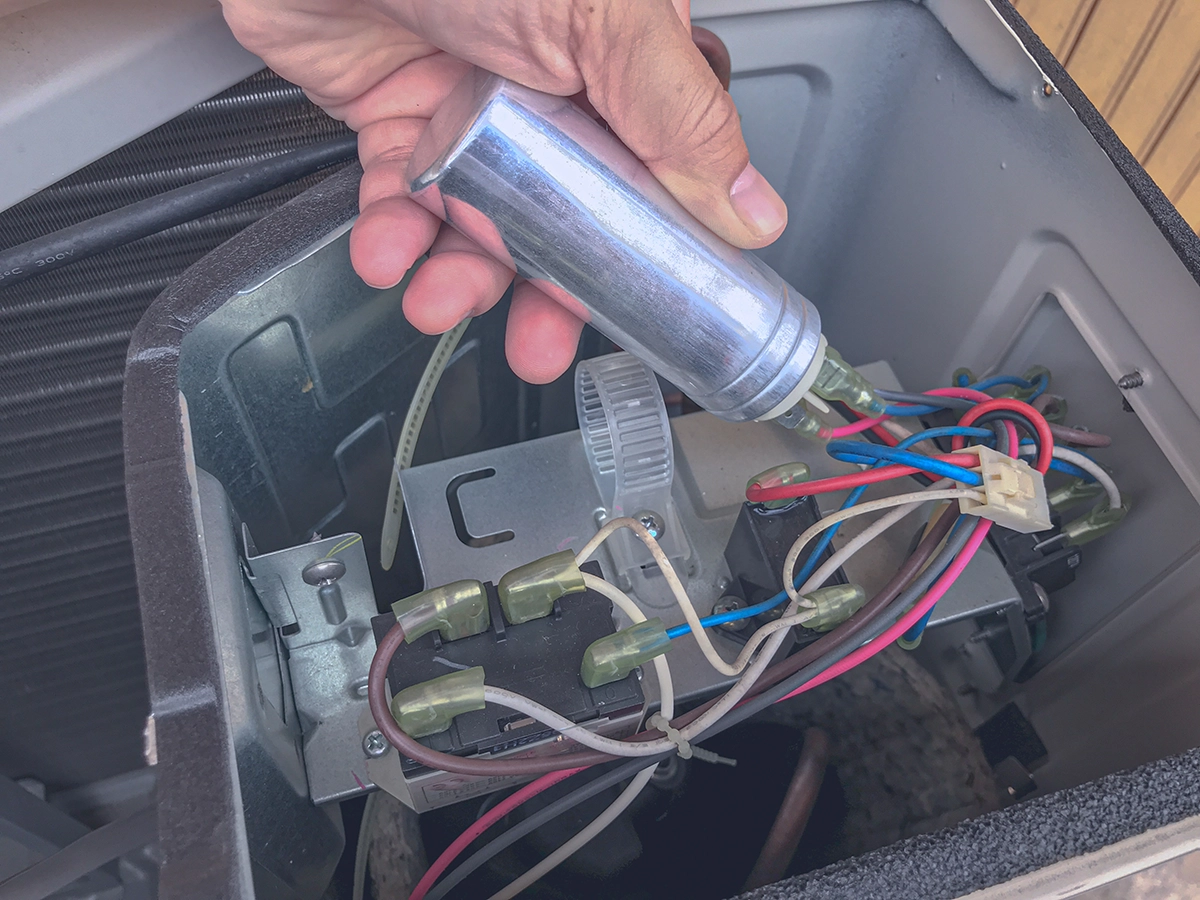
Your air conditioner might suddenly stop cooling. Your furnace might refuse to start. The problem could be a small but mighty component called the HVAC capacitor. This essential part stores and releases electrical energy. It helps your heating and cooling system’s motors start up and keep running smoothly. When it fails, your entire system can grind to a halt. This leaves you uncomfortable and frustrated. Understanding what capacitors do helps you recognize when they’re failing. Plus, you can identify problems early and get professional help before a minor issue becomes a major breakdown.
What Is an HVAC Capacitor and Why Does It Matter?
Think of a capacitor as a rechargeable battery. It gives your HVAC system’s motors the electrical boost they need to get moving. Your air conditioner and furnace have motors that power the compressor, blower fan, and condenser fan. These motors need a big jolt of energy to overcome inertia and start spinning. That’s where capacitors come in.
Most HVAC systems have two main types of capacitors. Start capacitors provide that initial surge of power to get motors moving from a standstill. Once the motor reaches about 75% of its operating speed, the start capacitor disconnects. Run capacitors work differently. They continue supplying a steady stream of energy while the motor operates. This helps it maintain consistent performance and efficiency.
Without a working capacitor, your system’s motors simply can’t do their job. The compressor won’t compress refrigerant. The blower won’t circulate air through your home. The condenser fan won’t expel heat outside. That’s why this relatively cheap component plays such a critical role in your comfort.
Common Signs Your HVAC Capacitor Is Failing
Capacitors don’t always fail suddenly. In fact, they often give warning signs that something’s wrong. Learning to recognize these symptoms can help you call for professional service. You’ll get help before you’re left without heating or cooling.
Your System Won’t Start
One of the most obvious signs is when your air conditioner or furnace simply refuses to turn on. You might hear a clicking sound as the system tries to start. However, the outdoor unit never kicks in or the blower fan never begins spinning. This happens because the motor doesn’t have enough electrical energy to overcome its initial resistance.
The System Takes Forever to Start
Sometimes your HVAC system will eventually start, but only after a long delay. You might notice the thermostat calling for cooling. Yet several minutes pass before you hear the outdoor unit finally rumble to life. This sluggish startup indicates that the capacitor is weakened. It’s struggling to provide adequate power.
You Hear Unusual Humming or Buzzing Sounds
A humming or buzzing noise coming from your outdoor AC unit often means the compressor is trying to start. But it can’t quite get there. The motor is receiving some power but not enough to actually begin running. This is hard on your equipment. Eventually, it will cause the motor to overheat and shut down on its safety limit.
Your Energy Bills Are Climbing
When a run capacitor starts to fail, your system’s motors have to work much harder to do the same job. This increased effort translates directly into higher electricity consumption. If you notice your energy bills creeping up without a corresponding increase in usage, a failing capacitor could be the culprit.
The System Shuts Off Randomly
Random shutdowns during a heating or cooling cycle can indicate a capacitor that’s on its last legs. The system might start fine. But then it shuts off before completing its cycle because the weakened capacitor can’t sustain the motor’s operation.
Why Do Capacitors Fail?
Understanding what causes capacitor failure can help you appreciate why regular maintenance is so important. Several factors contribute to capacitor breakdown over time.
Heat is the number one enemy of capacitors. These components are typically located near motors or inside the outdoor condensing unit. So they’re constantly exposed to high temperatures. Over time, this heat causes the internal components to break down. They lose their ability to hold an electrical charge.
Age also plays a significant role. Most capacitors are designed to last between 10 and 20 years. But many fail sooner depending on usage patterns and environmental conditions. If your HVAC system is more than a decade old and still has its original capacitor, replacement might be overdue.
Electrical surges from lightning strikes or power grid changes can damage capacitors instantly. Even if a surge doesn’t destroy the capacitor outright, it can weaken it significantly. This shortens its remaining lifespan.
Poor maintenance contributes to early capacitor failure as well. When air filters get clogged or outdoor units become covered in debris, motors have to work harder. This increased workload puts extra strain on capacitors. As a result, they wear out faster than they should.
How Professionals Diagnose and Replace Capacitors
When you call a licensed HVAC professional with a suspected capacitor problem, certified technicians follow a systematic process. They identify the issue accurately and never guess or replace parts unnecessarily.
First, your technician will perform a visual inspection of the capacitor. They look for signs like a bulging or swollen top, rust or corrosion, and leaking fluid. These are all clear indicators that replacement is needed. However, not all failing capacitors show visible damage. So professionals also use specialized testing equipment.
A certified technician will use a multimeter to measure the capacitor’s actual capacitance. Then they compare it to the rating printed on the component. If the measured value falls outside the acceptable range—typically within 6% of the rated capacitance—your professional will recommend replacement. They also verify proper voltage ratings to ensure your system receives exactly what it needs.
Your HVAC professional will handle the replacement process using safety-critical procedures. These require specialized training. Because capacitors store electrical energy even when the power is off, they must be properly discharged before handling. This is a task only trained professionals should perform.
Your technician will then disconnect the old capacitor. They carefully note the wiring configuration and install the correct replacement with the proper specifications for your specific equipment. Using the wrong capacitor can damage your motors or create safety hazards. That’s why professionals always install manufacturer-approved parts that match your system’s requirements perfectly. After installation, your technician will test the system to ensure everything operates correctly and efficiently.
The Risks of Ignoring a Bad Capacitor
Some homeowners are tempted to keep using their HVAC system even after noticing warning signs of capacitor trouble. Unfortunately, this approach can lead to much more expensive problems down the road.
When a capacitor fails completely, motors can overheat while trying to start. This excessive heat can damage motor windings. This leads to complete motor failure. Replacing a compressor motor or blower motor costs significantly more than replacing a capacitor. So addressing the problem early saves you money.
A struggling system also consumes more electricity while delivering less comfort. You’re essentially paying more to get worse performance, which makes no financial sense. Plus, the stress on other electrical components can create additional failure points throughout your system.
Protecting Your Investment Through Regular Maintenance
The best way to avoid unexpected capacitor failure is through routine professional maintenance. During comprehensive tune-ups, technicians inspect capacitors as part of their standard checklist. They measure capacitance, check for physical damage, and replace capacitors if they’re approaching the end of their useful life.
This proactive approach prevents emergency breakdowns during the hottest summer days or coldest winter nights. That’s when you need your HVAC system most. It also extends the life of your motors and other expensive components. This happens because they always receive the proper electrical support they need.
Regular filter changes help capacitor longevity. Keep your outdoor unit clear of debris too. Schedule annual professional maintenance as well. All these steps reduce the workload on your system and create a more stable operating environment. Following proper air conditioning maintenance practices can significantly extend the life of all your HVAC components.
When to Call for Professional Help
Maybe you’ve noticed warning signs we discussed—delayed starts, humming sounds, random shutoffs, or complete failure to start. Don’t wait for the problem to get worse. Experienced technicians can quickly diagnose capacitor issues and get your system back to peak performance.
Licensed professionals carry a full range of capacitors in their service vehicles. This means they can often complete repairs during the same visit. You won’t have to suffer through days without heating or cooling while waiting for parts to arrive.
Capacitor work involves stored electrical charges and requires technical knowledge. You need the right skills to select and install the correct component. Certified HVAC professionals have the specialized training, tools, and experience to handle these repairs safely and correctly.
Your comfort and safety are top priorities. Whether you need emergency repair service or want to schedule preventive maintenance to catch problems before they start, licensed HVAC professionals are here to help. They keep homeowners’ systems running smoothly year-round.
Frequently Asked Questions
How much does it cost to replace an HVAC capacitor?
Capacitor replacement typically costs between $150 and $400. The price depends on the type and your system’s specifications. This includes the part, labor, diagnostic time, and testing. The investment is minimal compared to motor replacement costs. These result from running with a failed capacitor, making prompt repair the smart financial choice.
How long do HVAC capacitors typically last?
Most HVAC capacitors last between 10 and 20 years under normal operating conditions. However, several factors can shorten their lifespan considerably. These include extreme heat exposure, electrical surges, poor maintenance, and heavy system usage. Systems that run frequently in hot climates often need capacitor replacement sooner than those in milder environments.
Can I tell if my capacitor is bad just by looking at it?
Visual inspection can reveal obvious failures. Look for a bulging or swollen top, rust, corrosion, or fluid leakage around the capacitor. However, many failing capacitors look perfectly normal externally. Professional testing with a multimeter is the only reliable way to determine the truth. It shows if a capacitor has lost its ability to hold the proper electrical charge.
Why does my AC hum but won’t start running?
A humming sound without startup typically indicates a failed start capacitor or run capacitor. The motor is receiving some electrical power. But it lacks the boost needed to overcome inertia and begin spinning. This situation can quickly damage your compressor motor if left unaddressed. So immediate professional service is essential.