

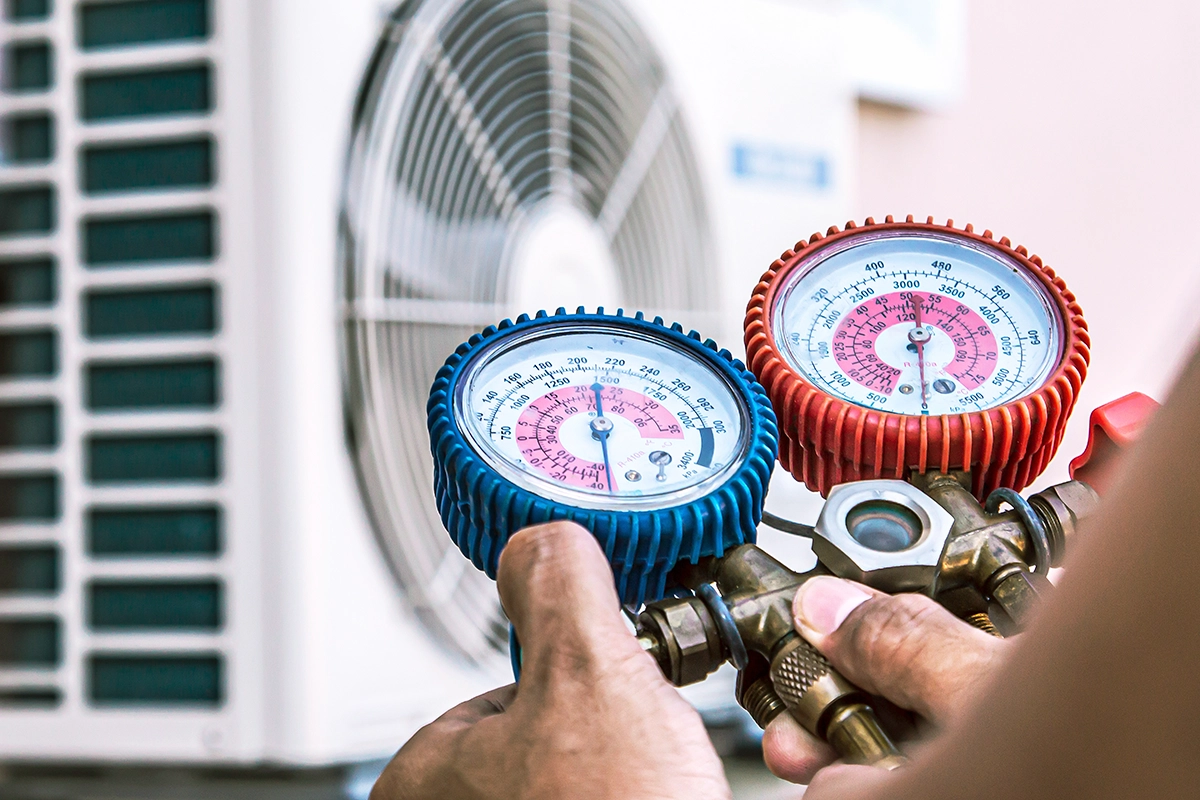
If you own an air conditioning system installed after 2010, chances are it uses R410A refrigerant. This cooling agent plays a crucial role in keeping your home comfortable during hot Kansas summers. Understanding what R410A is and how it affects your AC system can help you identify potential problems and make informed decisions about maintenance and repairs.
What Is R410A Refrigerant?
R410A, also known as Puron, is a hydrofluorocarbon (HFC) refrigerant that replaced the older R22 (Freon) in residential and commercial air conditioning systems. This environmentally friendlier refrigerant operates at higher pressures than its predecessor, which means AC systems designed for R410A are built with more robust components and enhanced efficiency standards.
The refrigerant circulates through your AC system, absorbing heat from inside your home and releasing it outside. This continuous cycle is what keeps your indoor spaces cool and comfortable. R410A is colorless and odorless when functioning properly, making it impossible to detect leaks through sight or smell alone.
Signs Your R410A System May Have Problems
Several warning signs can indicate issues with your R410A refrigerant system. Recognizing these symptoms early can prevent more extensive damage and costly repairs.
Reduced Cooling Performance
When your AC system struggles to reach the temperature set on your thermostat, low refrigerant levels may be the culprit. You might notice that your system runs continuously but never quite achieves the desired comfort level, especially during peak summer heat.
Ice Formation on Components
Ice buildup on your evaporator coils or refrigerant lines indicates a serious problem. Low R410A levels cause the remaining refrigerant to expand too much, leading to freezing temperatures in parts of the system where ice shouldn’t form.
Hissing or Bubbling Sounds
Unusual sounds coming from your AC unit, particularly hissing or bubbling noises, often signal refrigerant leaks. These sounds occur when R410A escapes through small holes or cracks in the refrigerant lines or coils.
Higher Energy Bills
When your AC system lacks sufficient R410A, it works harder to cool your home, resulting in increased energy consumption. If you notice unexpectedly high utility bills without changes in usage patterns, refrigerant issues could be the cause.
Why R410A Problems Occur
Understanding the common causes of R410A refrigerant issues helps homeowners recognize when professional attention is needed. Unlike automotive systems, properly functioning AC units don’t consume refrigerant – it circulates in a closed loop system.
System Leaks
The most common cause of R410A loss is leaks in the refrigerant lines, coils, or connections. These leaks can develop due to corrosion, vibration, manufacturing defects, or normal wear and tear over time. Even tiny pinhole leaks can gradually deplete refrigerant levels.
Installation Issues
Improper installation during initial setup or after repairs can create weak points in the system where leaks develop. Poor brazing, inadequate insulation, or incorrect fittings can all lead to refrigerant loss over time.
Component Failure
Failed gaskets, worn valve stems, or cracked coils can allow R410A to escape. These components may deteriorate due to age, extreme temperatures, or inadequate maintenance.
The Professional Repair Process
When your AC system experiences R410A-related problems, certified HVAC technicians follow a systematic approach to diagnose and resolve the issues. This professional process ensures safe handling of refrigerant and proper system operation.
A qualified technician will first perform leak detection using specialized equipment to locate the exact source of refrigerant loss. Electronic leak detectors, UV dye, or soap solutions help identify even the smallest leaks that might not be visible to the naked eye.
Once leaks are found and repaired, the technician will evacuate any remaining refrigerant and moisture from the system using a recovery unit. This step is crucial because contaminated refrigerant can damage system components and reduce efficiency.
After repairs are completed, the system undergoes pressure testing to verify the integrity of all connections and components. Finally, the technician will recharge the system with the proper amount of fresh R410A refrigerant according to manufacturer specifications.
Why Professional Service Is Essential
Working with R410A refrigerant requires specialized training, equipment, and EPA certification. The high pressures involved in R410A systems can be dangerous for untrained individuals, and improper handling can cause serious injury or property damage.
Licensed technicians have the proper recovery equipment to safely remove and dispose of old refrigerant according to environmental regulations. They also possess the knowledge to properly charge the system with the exact amount of R410A needed for optimal performance.
Additionally, professional service ensures that underlying problems causing refrigerant loss are properly identified and repaired. Simply adding more refrigerant without fixing leaks will result in continued problems and wasted money.
Preventing R410A Problems
Regular maintenance is the best way to prevent R410A refrigerant issues and extend the life of your AC system. Annual professional inspections can identify potential problems before they become major repairs.
During routine maintenance visits, technicians check refrigerant levels, inspect connections, clean coils, and test system performance. These proactive measures help maintain proper refrigerant levels and system efficiency.
Homeowners can also help by keeping the outdoor unit free of debris, changing air filters regularly, and scheduling prompt repairs when unusual symptoms appear. These simple steps reduce strain on the system and help prevent conditions that could lead to refrigerant leaks.
If you’re experiencing any signs of AC problems or suspect refrigerant issues in your Haysville area home, contact our certified technicians for professional diagnosis and repair. Our experienced team has the expertise and equipment needed to safely handle R410A systems and restore your home’s comfort.
For more information about common AC problems and their warning signs, check out our guide on HVAC issues in Haysville. You can also learn more about AC condensers and their role in your cooling system’s operation.
Frequently Asked Questions
Can I add R410A refrigerant to my AC system myself?
No, handling R410A refrigerant requires EPA certification and specialized equipment due to the high pressures involved. Only licensed HVAC technicians should add or remove refrigerant from your system.
How do I know if my AC uses R410A or the older R22 refrigerant?
Check the label on your outdoor unit or condenser. Systems installed after 2010 typically use R410A, while older systems use R22. The label will clearly indicate which refrigerant type your system requires.
Why can’t I just keep adding refrigerant when my AC isn’t cooling well?
AC systems don’t consume refrigerant during normal operation. If levels are low, there’s likely a leak that needs repair. Adding refrigerant without fixing leaks wastes money and doesn’t solve the underlying problem.
How often should R410A refrigerant be replaced in my AC system?
R410A refrigerant doesn’t need regular replacement in a properly functioning system. It only needs attention if there are leaks or other system problems that cause refrigerant loss.