

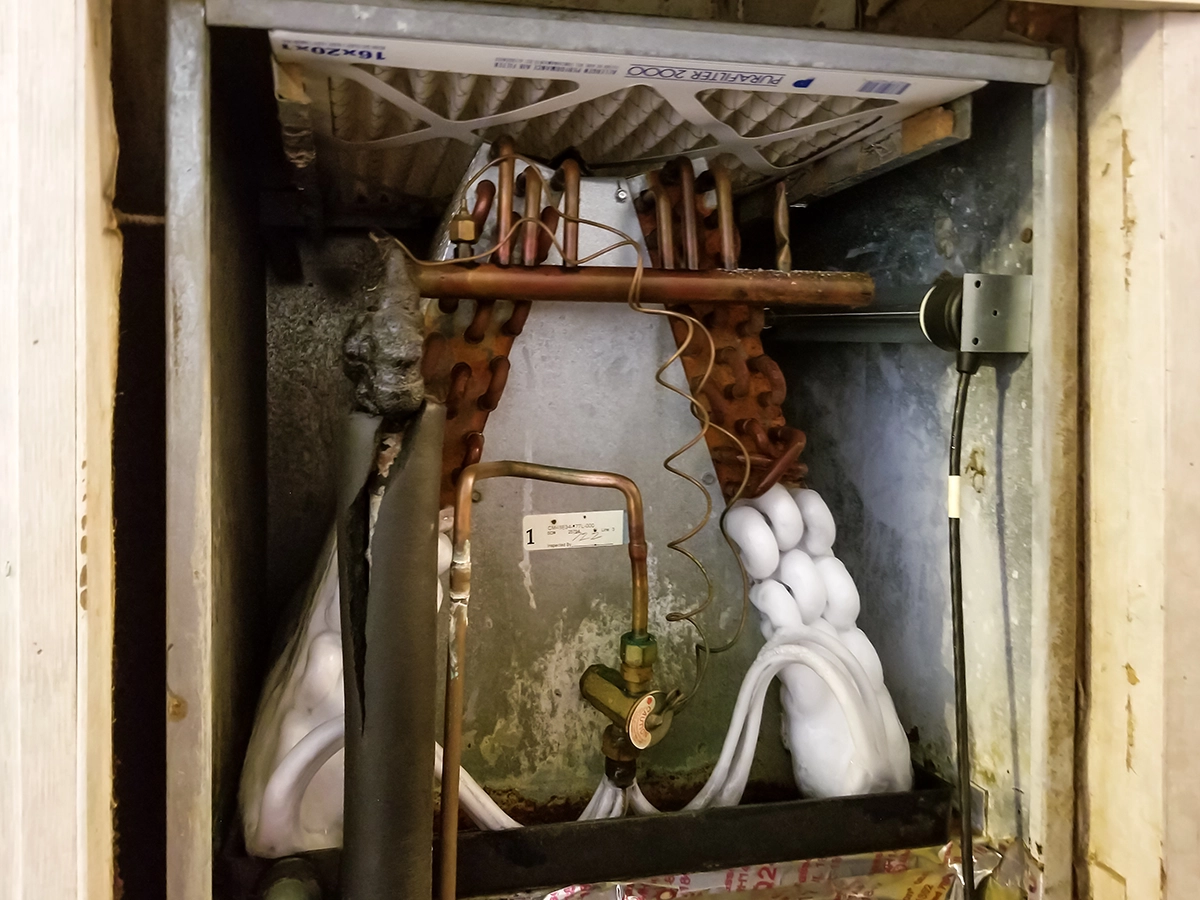
Your air conditioner works hard to keep your home comfortable. However, when the AC coil inside your system starts to fail, you’ll notice reduced cooling performance almost immediately. These critical components play an essential role in the heat transfer process that makes air conditioning possible. Understanding how they work, recognizing signs of trouble, and knowing when to call for professional help can save you from sweltering summers and costly emergency repairs.
What Is an AC Coil and How Does It Work?
We often talk with homeowners who’ve heard the term “coil” mentioned during service visits. Yet they aren’t exactly sure what it means. Your air conditioning system actually contains two types of coils that work together to cool your home. The evaporator coil sits inside your home, typically in the indoor air handler or furnace cabinet. Meanwhile, the condenser coil lives outside in the condensing unit.
These components function as the heart of your cooling system’s refrigeration cycle. The evaporator coil absorbs heat from your indoor air as refrigerant passes through it. This is why the air coming from your vents feels cold. That refrigerant then travels to the outdoor condenser coil. There, it releases the absorbed heat into the outside air. This continuous cycle removes warmth from your home and transfers it outdoors. As a result, it creates the comfortable indoor environment you expect during hot weather.
Both coils consist of copper or aluminum tubing bent into multiple rows. This design creates maximum surface area for efficient heat transfer. Thin metal fins attach to these tubes and further increase the surface area. They also help dissipate heat more effectively. When everything operates properly, this design allows your system to cool your home efficiently while consuming reasonable amounts of energy.
Common AC Coil Problems Homeowners Face
Over time, various issues can compromise coil performance. Dirt and dust accumulation tops the list of common problems. As your system pulls air across the evaporator coil, airborne particles stick to the moist surface. This buildup acts like a blanket, insulating the coil and preventing proper heat transfer. Similarly, the outdoor condenser coil collects dirt, pollen, grass clippings, and other debris that blocks airflow and reduces efficiency.
Frozen Evaporator Coils
When we receive emergency calls about AC systems that aren’t cooling, frozen evaporator coils frequently turn out to be the culprit. Ice formation occurs when something disrupts normal airflow or refrigerant flow across the coil. Restricted airflow from a dirty air filter, blocked return vents, or failing blower motor can cause the coil temperature to drop below freezing. Refrigerant leaks also lead to freezing. This happens because insufficient refrigerant pressure changes the temperature dynamics within the coil.
You might notice reduced airflow from your vents, water pooling around your indoor unit, or even visible ice on the refrigerant lines. If you see ice formation, turn off your system immediately. Then contact our certified technicians who can safely diagnose and repair the underlying cause.
Coil Leaks and Refrigerant Loss
Refrigerant leaks represent another serious coil problem. These leaks develop from several causes. For example, corrosion, physical damage, or manufacturing defects can all cause leaks. Formicary corrosion—a specific type that creates ant-tunnel-like patterns inside copper tubing—has become increasingly common in recent years. This corrosion occurs when certain chemicals interact with copper in the presence of moisture.
Signs of a refrigerant leak include longer cooling cycles, warm air from vents, hissing sounds near the indoor or outdoor unit, and ice on refrigerant lines. Because refrigerant is an environmental hazard, homeowners should always call professional technicians rather than attempting any repairs. In fact, handling it requires EPA certification. We use specialized leak detection equipment to locate even tiny leaks. Then we properly recover the remaining refrigerant before making repairs.
The Importance of Regular Coil Maintenance
Preventive maintenance keeps your evaporator and condenser coils functioning at peak efficiency. During routine maintenance visits, our technicians thoroughly inspect both coils for signs of damage, corrosion, or excessive dirt buildup. We clean the coils using appropriate methods and solutions that remove contaminants without damaging the delicate fins.
Regular coil cleaning delivers multiple benefits. First, it restores heat transfer efficiency. This means your system cools your home more effectively while using less energy. Clean coils also reduce strain on your compressor—the most expensive component to replace. The system doesn’t have to work as hard to achieve your desired temperature. Plus, proper maintenance extends the overall lifespan of your air conditioning equipment. This protects your investment.
We typically recommend professional maintenance at least once annually. Ideally, schedule it in spring before cooling season begins. However, homes with pets, high dust levels, or residents with allergies may benefit from more frequent service. Between professional visits, homeowners can help maintain system efficiency. Simply change air filters monthly and keep the area around the outdoor unit clear of vegetation and debris.
When AC Coil Replacement Becomes Necessary
Despite best maintenance efforts, coils eventually wear out. Corrosion, repeated refrigerant leaks, or physical damage sometimes mean replacement makes more sense than repair. Age plays a significant role in this decision. If your system is approaching 10-15 years old and experiencing coil problems, replacement often proves more cost-effective than investing in repairs for aging equipment.
When evaluating whether to repair or replace, we consider several factors. The cost of the repair compared to the value of your entire system helps guide the decision. A general rule suggests that if repair costs exceed half the price of a new system, replacement deserves serious consideration. This is especially true for older units. We also look at your system’s efficiency rating. Newer systems offer substantially better energy efficiency than models from even a decade ago.
The Coil Replacement Process
Coil replacement requires specialized tools, refrigerant handling certification, and technical knowledge. Only certified professionals possess these qualifications. We begin by safely recovering all refrigerant from the system according to EPA regulations. For evaporator coil replacement, we’ll access the cabinet housing the coil. Next, we disconnect refrigerant lines and electrical connections. Then we carefully remove the old coil.
Installing the new evaporator or condenser coil involves precise work to ensure proper fit, secure connections, and leak-free operation. After installation, we pressure test the system to verify there are no leaks. Then we evacuate any air and moisture before recharging with the correct type and amount of refrigerant. Finally, we test the entire system to confirm it’s cooling properly and operating at peak efficiency.
Protecting Your Investment in AC Coils
Once you’ve invested in coil repair or replacement, protecting that investment makes good sense. Maintaining a regular filter replacement schedule prevents the majority of dirt-related coil problems. We recommend checking your filter monthly and replacing it whenever it appears dirty. This might be every 30-90 days depending on your household conditions.
Keep your outdoor condensing unit clear of obstacles. Maintain at least two feet of clearance on all sides to ensure adequate airflow across the condenser coil. Trim back shrubs, remove leaves and debris, and avoid stacking items against the unit. During fall, you can cover the top of the unit to keep leaves out. However, never cover the sides because that would trap moisture and promote corrosion.
Schedule annual professional maintenance without fail. Think of it as insurance for your comfort and wallet. During these visits, our technicians catch small problems before they become expensive emergencies. We clean coils, check refrigerant levels, inspect electrical connections, and verify that every component operates as designed. This proactive approach keeps your system running efficiently. It also helps avoid unexpected breakdowns during the hottest days of summer.
Signs You Need Professional Coil Service
Certain warning signs indicate your evaporator or condenser coil needs professional attention. Reduced cooling capacity tops the list. If your system runs constantly but struggles to maintain comfortable temperatures, dirty or damaged coils could be blocking efficient heat transfer. Higher-than-normal energy bills often accompany this problem. This happens because your system works harder to compensate for reduced efficiency.
Strange noises like hissing or bubbling suggest refrigerant leaks in the coil. Visible ice on indoor refrigerant lines or the outdoor unit indicates airflow or refrigerant problems affecting coil performance. Water leaks around your indoor unit might result from a frozen evaporator coil that’s melting. This can overwhelm the drain pan. Unpleasant odors when the AC runs can signal mold or mildew growth on a dirty evaporator coil.
When you notice any of these symptoms, don’t wait for the problem to worsen. Early intervention almost always costs less than emergency repairs. It also prevents the discomfort of a complete system failure. Our experienced technicians quickly diagnose coil issues. Then they recommend the most cost-effective solution, whether that’s cleaning, repair, or replacement.
At Premier Comfort Solutions, we understand how essential reliable air conditioning is for your comfort. Our certified technicians have the training, tools, and experience to handle any AC coil issue. This includes everything from routine maintenance to complete coil replacement. We take pride in helping homeowners maintain efficient, reliable cooling systems that deliver comfort season after season. When coil problems threaten your comfort, schedule a maintenance appointment to restore it quickly and professionally.
Frequently Asked Questions
How often should AC coils be cleaned?
We recommend professional coil cleaning at least once per year during routine maintenance. Typically, schedule this in spring before cooling season. Homes with pets, high dust levels, or allergy sufferers may benefit from cleaning twice yearly. The outdoor condenser coil especially needs attention since it’s exposed to dirt, pollen, and debris year-round. Regular filter changes between professional visits help keep the evaporator coil cleaner longer.
Can I clean my AC coils myself?
While homeowners can gently rinse visible debris from the exterior fins of the outdoor unit, thorough coil cleaning requires professional equipment and expertise. The evaporator coil sits inside the system where accessing it requires specialized knowledge and tools. Using wrong cleaning methods or solutions can damage delicate fins. It can also leave residue that attracts more dirt. We have the proper tools and cleaners to safely restore coil efficiency without risking damage to your system.
How long do AC coils typically last?
With proper maintenance, AC coils typically last 10-15 years. Often, they match the lifespan of the entire system. However, factors like coastal salt air, industrial pollutants, or neglected maintenance can shorten coil life significantly. Corrosion and refrigerant leaks are the most common reasons for premature coil failure. Regular professional maintenance helps maximize coil longevity by catching problems early and keeping surfaces clean.
What causes an evaporator coil to freeze?
Frozen evaporator coils result from restricted airflow or low refrigerant levels. Dirty air filters, blocked return vents, or a failing blower motor reduce airflow across the coil. This causes temperatures to drop below freezing. Refrigerant leaks lower system pressure, also creating freezing conditions. If you notice ice formation, turn off your system immediately. Then contact a professional technician to diagnose and repair the underlying cause safely.