

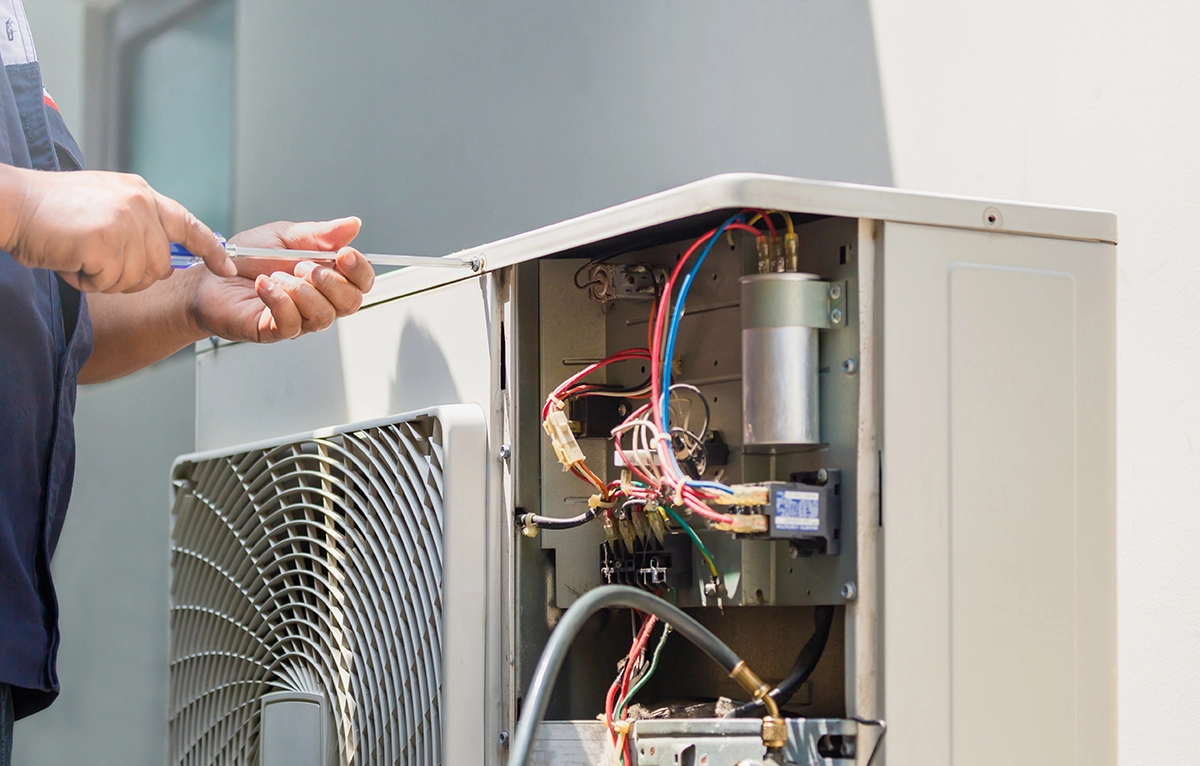
If your air conditioner suddenly stops cooling but the fan keeps running, there’s a good chance your AC contactor has failed. You might also hear a humming sound when the system tries to start. The contactor is a small but critical electrical component. It controls the flow of electricity to your compressor and condenser fan motor. When it malfunctions, your entire cooling system can grind to a halt. This leaves you uncomfortable during the hottest days of the year. In this guide, we’ll explain what this component does. We’ll also show you how to recognize the warning signs of failure. Plus, you’ll learn what to expect when we diagnose and repair the problem.
What Is an AC Contactor and What Does It Do?
An air conditioning contactor is basically a heavy-duty electrical switch. It sits inside your outdoor condenser unit. When your thermostat signals that your home needs cooling, it sends a low-voltage command to the contactor. This signal causes the contactor to close its electrical contacts. As a result, full voltage electricity flows to the compressor and condenser fan motor. Once these components receive power, they begin the refrigeration cycle that cools your home.
The contactor itself has several key parts. First, the coil receives the low-voltage signal from your thermostat. This creates a magnetic field. Then, this magnetic field pulls together the electrical contacts. These contacts are typically made from silver-coated metal designed to handle high current loads. Spring tension keeps these contacts open when the system is off. This prevents electricity from flowing unnecessarily. Over time, these components wear down from repeated use, electrical arcing, and environmental conditions.
Because this component cycles on and off multiple times throughout the day, it experiences significant wear and tear. In fact, contactors are among the most commonly replaced parts in air conditioning systems. That’s why understanding the warning signs of failure can help you address problems. You can catch issues before a complete breakdown occurs.
Common Signs Your Contactor Is Failing
Recognizing the symptoms of a failing contactor can save you from an emergency breakdown during peak cooling season. The most obvious sign is when your outdoor unit won’t start at all. This happens even though your thermostat is calling for cooling. You might walk outside to find your condenser unit completely silent. Alternatively, you might hear a humming or buzzing sound without the fan spinning or compressor engaging.
Clicking or Chattering Sounds
When a contactor begins to fail, you might hear rapid clicking or chattering sounds from your outdoor unit. This occurs when the contactor tries to close its electrical contacts but can’t maintain a solid connection. The magnetic coil pulls the contacts together. However, weakened springs, pitted contact surfaces, or electrical issues cause them to bounce apart repeatedly. This creates the distinctive clicking sound homeowners often describe.
Visible Damage or Pitting
A certified technician can inspect your contactor to spot visible damage. Our team examines the component with the power safely disconnected. We look for electrical contacts that have become pitted, burned, or melted from repeated arcing. The plastic housing might show signs of heat damage, discoloration, or even melting in severe cases. These visual clues tell us that the component has reached the end of its service life and needs replacement.
Intermittent System Operation
Sometimes a failing contactor works inconsistently. Your air conditioner might run normally for hours. Then it suddenly shuts off without explanation. After sitting idle for a while, it might start working again. This intermittent behavior often means that the contacts are making poor electrical connections. This happens due to wear, contamination, or damage. Eventually, the system will fail completely if you don’t address the issue.
What Causes AC Contactors to Fail?
Understanding why contactors fail helps homeowners appreciate the importance of regular maintenance. Normal wear and tear is the most common cause of failure. Each time your air conditioner cycles on and off, the contactor opens and closes its electrical contacts. Over thousands of cycles, these contacts gradually wear down. They become pitted and less effective at conducting electricity.
Electrical arcing speeds up this wear process. When the contacts separate while carrying electrical current, a small arc jumps between them. While contactors handle this arcing by design, it gradually wears away the metal surfaces. High electrical loads, voltage changes, and power surges can make this arcing worse. These factors significantly shorten the component’s lifespan.
Environmental factors also play a role in contactor failure. Your outdoor unit faces exposure to rain, humidity, dust, pollen, and temperature extremes. The contactor sits inside the unit’s protective cabinet. Even so, moisture can still get in over time. Corrosion, rust, and contamination can interfere with proper operation. Insects and spiders sometimes build nests in and around electrical components. This creates additional problems.
In some cases, an underlying system problem causes early contactor failure. A failing compressor that draws too much current puts extra strain on the contactor. Loose electrical connections create resistance and heat buildup. Improper installation or using an undersized contactor for your system can lead to early failure as well. That’s why we always look into the root cause when replacing these components.
How We Diagnose Contactor Problems
When you contact us about cooling problems, our technicians follow a systematic process. We start by listening to your description of the symptoms. Then we observe how the system behaves. Next, we safely disconnect power to the unit and remove the access panel. This allows us to visually inspect the contactor and surrounding components.
Using specialized testing equipment, we measure voltage at various points in the electrical circuit. We check whether the thermostat sends the proper signal to the contactor coil. We test the voltage coming into the contactor from your electrical panel. We also verify that voltage reaches the compressor and fan motor when the contacts close. These measurements help us pinpoint exactly where the electrical path is interrupted.
We also examine the physical condition of the contacts themselves. Even if the contactor appears to function electrically, severely pitted or burned contacts need replacement. We look for signs of overheating and check the tightness of wire connections. We also inspect related components that might have contributed to the failure. This thorough approach ensures we address not just the symptom but any underlying causes as well.
The Professional Replacement Process
Replacing an AC contactor is electrical work that licensed professionals should always perform. The process involves working with high-voltage electricity. This presents serious safety risks for untrained individuals. Our technicians arrive with the proper tools, safety equipment, and replacement parts. We complete the job correctly every time.
After confirming that your contactor has failed, we disconnect all power sources. This ensures safe working conditions. We carefully document how the existing wires connect before removing them. Improper wiring can damage your system or create fire hazards. Once we remove the old contactor, we compare specifications. This ensures the replacement matches your system’s requirements for voltage and current ratings.
Installing the new component involves more than just connecting wires. We verify that all electrical connections are tight and secure. Loose connections generate heat and lead to early failure. We check that the contactor is properly mounted and positioned. This avoids putting mechanical stress on the wiring. Before restoring power, we double-check every connection to prevent mistakes.
After installation, we restore power and test the entire system through multiple cooling cycles. We measure voltage and current draw to confirm everything operates within normal limits. We listen for unusual sounds and verify that both the compressor and condenser fan start promptly. This happens when the thermostat calls for cooling. This quality assurance process gives you confidence that the repair will last.
Preventing Future Contactor Problems
Contactors eventually wear out through normal use. However, regular maintenance can maximize their lifespan and help catch problems early. During routine maintenance visits, our technicians inspect electrical components including the contactor. We look for early signs of wear and clean away debris and contamination. We also tighten electrical connections that may have loosened over time.
We also measure electrical characteristics that show how well your system is functioning. High current draw from a struggling compressor puts extra stress on the contactor. Addressing compressor problems early protects the contactor and other components from early failure. Similarly, correcting voltage imbalances or installing surge protection can prevent electrical damage.
Keeping your outdoor unit clean and clear of debris improves airflow. This reduces heat buildup, which extends the life of electrical components. Make sure your unit has proper clearance from vegetation, buildings, and other obstructions. This helps it run more efficiently. These simple steps reduce the stress on your contactor and the entire system. Following proper air conditioning maintenance practices recommended by experts helps maximize efficiency and component life.
When to Call for Professional Help
If you notice any signs that your air conditioning system isn’t starting properly, don’t wait for a complete breakdown. Early action often prevents more extensive and expensive damage. A failing contactor can cause your compressor to overheat or fail to start properly. This potentially leads to compressor damage that costs much more to repair.
We understand how uncomfortable your home becomes when the air conditioning stops working. This is especially true during hot weather. Our team responds quickly to cooling emergencies. We arrive prepared with common replacement parts on our service vehicles. We diagnose the problem accurately and explain your options clearly. We also complete repairs efficiently so you can get back to comfortable living.
Even if your system seems to be working fine, scheduling annual maintenance helps catch small problems before they become major failures. During these visits, we inspect contactors and other wear-prone components. This gives you advance notice if replacement will be needed soon. This proactive approach prevents unexpected breakdowns. It also keeps your system running reliably year after year.
Frequently Asked Questions
How much does it cost to replace an AC contactor?
Contactor replacement typically costs between $150 and $400. This depends on the part quality, your system’s specifications, and labor rates in your area. The component itself usually costs $20 to $80. The remainder covers professional diagnosis, installation, and testing. Exact pricing varies based on your specific system. It also depends on any underlying issues discovered during inspection.
How long does an AC contactor typically last?
Most contactors last between 5 and 10 years with normal use. However, lifespan varies considerably based on operating conditions and cycle frequency. Systems that run constantly during long cooling seasons experience more wear. This is compared to those used intermittently. Electrical problems, poor maintenance, and environmental factors can significantly shorten contactor life. Well-maintained systems in moderate climates may exceed typical lifespan expectations.
Can I test my AC contactor myself to see if it’s bad?
Visual inspection for obvious damage like burned or pitted contacts is possible after safely disconnecting power. However, proper testing requires specialized electrical equipment and knowledge. Testing involves working with high voltage electricity, which poses serious injury risks. We strongly recommend contacting a licensed HVAC professional for proper diagnosis. Don’t attempt electrical testing yourself, as improper procedures can damage equipment or cause personal injury.
Will a bad contactor damage my air conditioner compressor?
Yes, a failing contactor can potentially damage your compressor. When contacts become pitted or don’t close properly, they create resistance. This reduces voltage reaching the compressor. As a result, the compressor struggles and overheats while trying to start. Repeated hard starts or running on inadequate voltage stresses the compressor windings. This can lead to early compressor failure, which costs significantly more to repair than contactor replacement.