

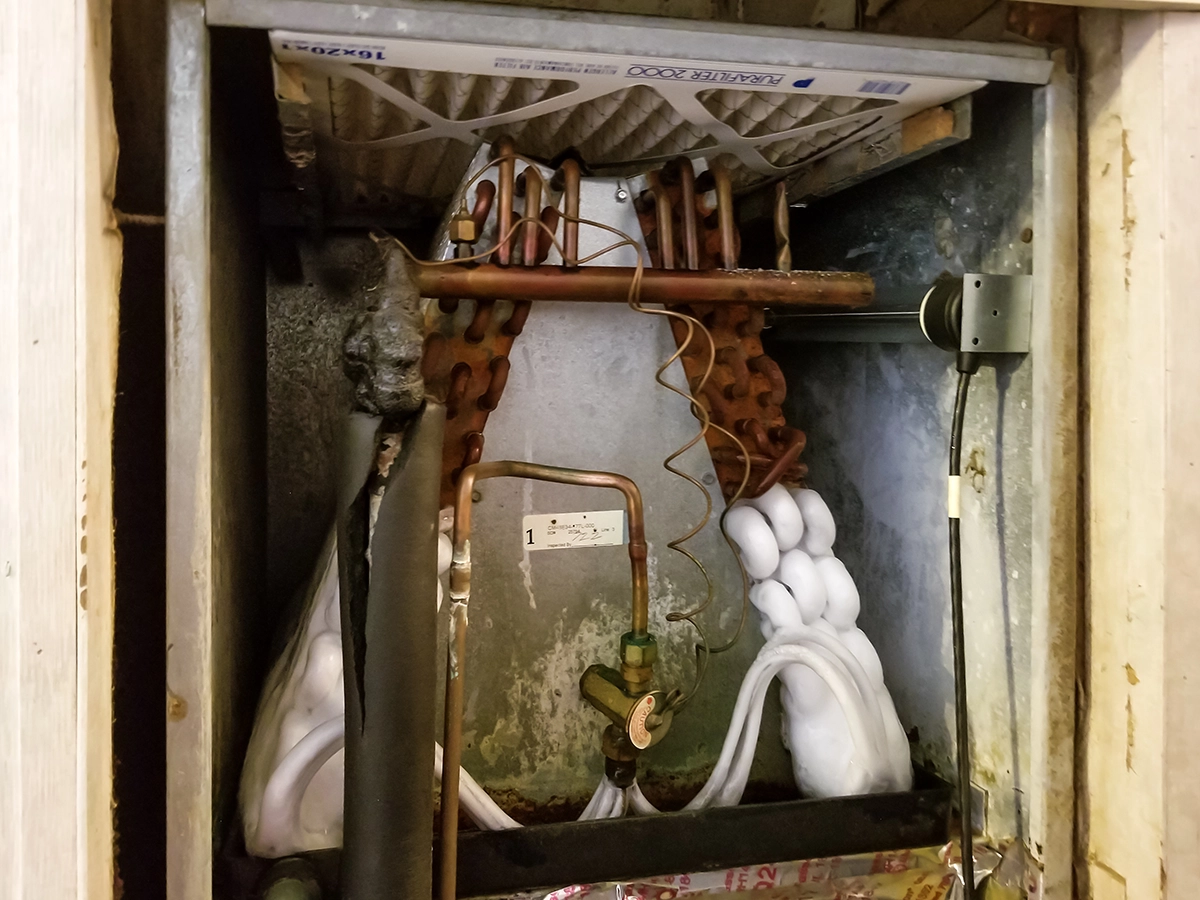
Is your AC indoor evaporator coil frozen causing water backup in Wichita, and you’re discovering puddles or drips around your furnace or air handler? The most common culprit behind a frozen evaporator coil is a dirty or clogged air filter that’s choking off airflow, which causes the coil temperature to plummet below freezing. Once ice builds up on the coil, it eventually melts faster than the condensate drain can handle. This leads to water overflow inside your home. While checking your filter is a quick first step, other causes—like refrigerant leaks, blower motor failures, or blocked return vents—require the expertise of a licensed HVAC technician to diagnose and repair safely. We help Wichita homeowners get to the root of frozen coil problems quickly so you can restore cool, dry comfort without the mess.
Why Is Your AC Evaporator Coil Frozen and Leaking Water?
When your indoor evaporator coil freezes, you’ll often discover water pooling around your furnace or air handler. Sometimes that’s enough to damage flooring or nearby belongings. The coil itself sits inside your system and normally stays cold enough to pull moisture out of the air, which drains harmlessly away through a condensate line. But when something disrupts that delicate balance, the coil drops below freezing. Instead of draining, the condensate freezes into a solid block of ice on the coil. Once your system shuts off or the ice finally melts, all that frozen water rushes into the drain pan at once. This often overwhelms it and spills onto your floor.
Two problems typically cause this freeze: restricted airflow or low refrigerant pressure. Restricted airflow—from a clogged filter, blocked return vents, or a failing blower—means warm air can’t reach the coil to keep its temperature in the normal range. Low refrigerant pressure, usually from a leak, drops the coil temperature even further. Both conditions push the coil below the freezing point. As a result, normal condensation turns into ice.
In Wichita’s summer heat, a frozen AC indoor evaporator coil causing water backup is especially frustrating because your system runs longer. This gives ice more time to build and creates more water to manage when it melts. When we respond to these calls, we first identify whether airflow or refrigerant is the root cause. Then we address the underlying issue to restore safe, efficient cooling.
Common Causes of a Frozen Evaporator Coil in Wichita Homes
When you discover ice forming on your indoor AC coil, several underlying issues may be at work. The most frequent culprit we encounter in Wichita homes is restricted airflow. A clogged or dirty air filter forces your system to work harder. This drops the temperature of the coil surface below freezing. When warm, humid air can’t circulate properly across the coil, moisture in the air freezes on contact. Similarly, blocked return vents, closed registers in unused rooms, or a malfunctioning blower motor can all choke off the airflow your evaporator coil needs to stay above freezing.
Refrigerant problems represent another common diagnosis. Low refrigerant levels—often caused by a slow leak in the line set (the copper tubing connecting your indoor and outdoor units)—reduce system pressure. They also allow the coil to become dangerously cold. Our licensed technicians are trained to locate and repair these leaks safely. We also see issues with dirty evaporator coils themselves. Years of dust and debris act as insulation, preventing heat exchange and creating localized freezing.
In Wichita’s humid summer climate, that ice can accumulate quickly. When the buildup eventually melts, condensate drain systems can overflow, causing water leakage and damage around the furnace. Thermostat malfunctions and outdoor temperature swings round out the list. Running your AC when outdoor temperatures drop below 60°F at night—common during Wichita’s spring and fall shoulder seasons—can trigger coil freezing because the system isn’t designed to operate in cooler conditions.
Similar to issues like a frozen outdoor unit, frozen evaporator coils require systematic diagnosis. When we respond to a frozen coil, we methodically check each potential cause: airflow volumes, refrigerant charge and pressure, coil cleanliness, blower operation, and thermostat calibration. Identifying the root cause is essential because simply thawing the ice without addressing what froze it in the first place means you’ll face the same water backup and system failure again within days.
What to Know Before You Call a Professional
If you notice water pooling around your indoor unit or suspect your evaporator coil has frozen, the first and most important step is to turn off your air conditioning system immediately. Running a system with a frozen coil can cause serious damage to the compressor. This transforms what might be a straightforward repair into a major expense. Switch off the AC at the thermostat to prevent the system from cycling back on.
While you’re waiting for our team to arrive, take note of when you last changed your air filter. A severely clogged filter is one of the most common reasons for frozen coils and water backup in Wichita homes. If the filter looks dirty or hasn’t been changed in over three months, that information will help us diagnose the problem faster.
You can also visually inspect the area around your indoor unit for obvious water leaks or ice buildup to report to our team. However, avoid touching any components or attempting to remove ice yourself. Maintaining good indoor air quality through regular filter changes helps prevent these freezing issues and keeps your home comfortable. These observations give us valuable information when we respond to your call. In fact, they help us bring the right tools and parts for a faster resolution.
Get Expert AC Repair in Wichita Today
When your evaporator coil freezes and water starts backing up into your home, you need a licensed technician who understands how these systems work and can restore your comfort quickly. At Premier Comfort Solutions, we respond promptly to AC emergencies throughout Wichita. We diagnose the root cause of frozen coils—whether it’s restricted airflow, low refrigerant, a failing blower motor, or drainage problems. Then we provide the right repair to prevent it from happening again.
Our team brings the equipment, experience, and parts needed to handle everything from simple filter housing issues to complex refrigerant leaks and component replacements. We stand behind our work with a workmanship warranty. Plus, we offer financing options to help you manage the cost of unexpected repairs. Every service call starts with a thorough inspection of your entire system, so you get a complete picture of what’s needed and why.
As summer temperatures in Wichita climb and your AC runs harder, frozen coils and water backups tend to surface. Catching these problems early—before water damage spreads or your system fails completely—can save you both headaches and expense. Give us a call when you need dependable AC repair, and we’ll get your system back to safe, efficient operation.
Frequently Asked Questions
Why is my AC indoor evaporator coil frozen causing water backup in Wichita?
A frozen evaporator coil is almost always caused by restricted airflow from a dirty air filter or low refrigerant from a leak. When warm air can’t reach the coil, it drops below freezing. This turns condensation into ice. Once that ice melts, it overwhelms the drain pan and requires a licensed technician to diagnose and repair the underlying issue.
Can I run my AC if the evaporator coil is frozen and water is leaking?
No, you should shut off your system immediately at the thermostat. Running your AC with a frozen coil can severely damage the compressor. This turns a manageable repair into a major replacement. We recommend turning the system off and calling us right away so we can safely thaw the coil and fix the root cause.
How do I know if my frozen evaporator coil is caused by airflow or refrigerant?
Only a licensed HVAC technician can accurately diagnose whether airflow restriction or refrigerant loss caused your coil to freeze. We use specialized gauges to measure refrigerant pressure and airflow volumes across the coil. If your filter is visibly clogged, airflow is likely. Either way, we’ll pinpoint the exact cause and recommend the right repair.
Will a frozen AC evaporator coil causing water backup damage my home?
Yes, water backup from a melting frozen coil can damage flooring, ceilings, and nearby belongings if left unaddressed. The overflow often spreads beyond the drain pan. It soaks into carpet, hardwood, or drywall. That’s why we recommend shutting off your system immediately and contacting us for prompt inspection and repair to prevent further water damage and restore safe cooling.