

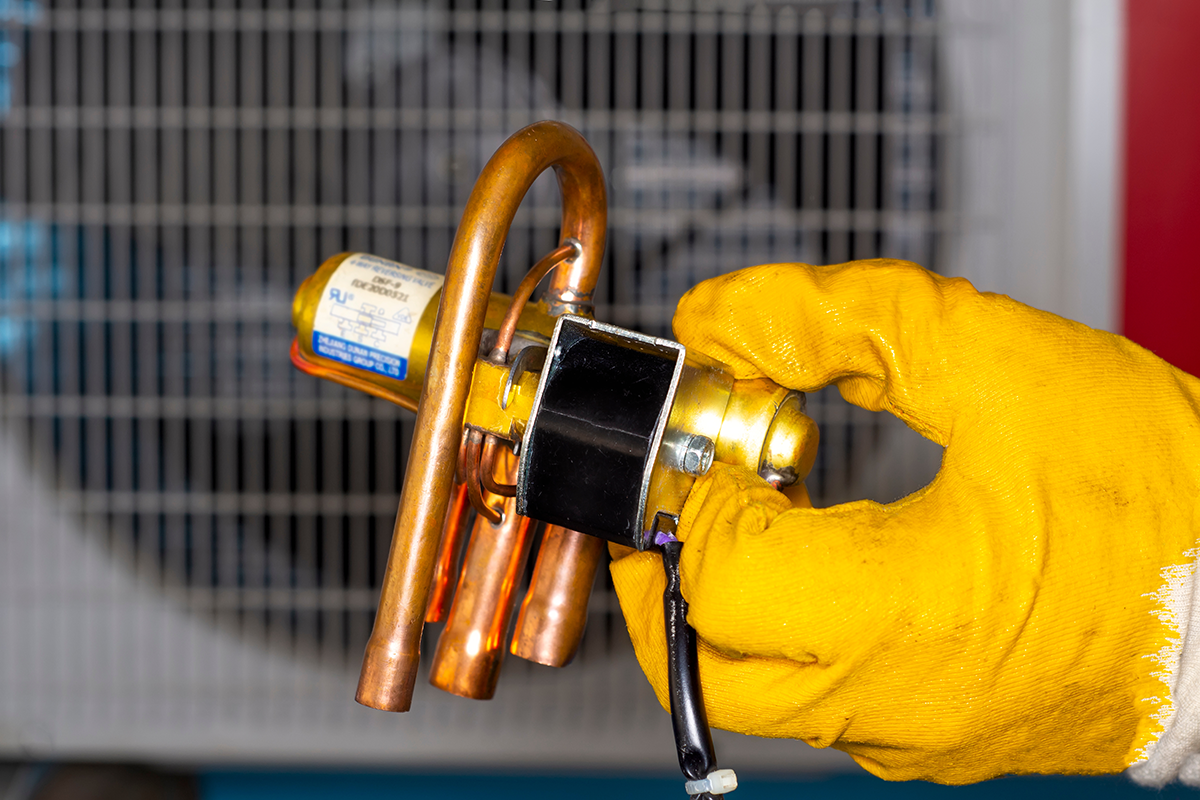
You step outside on a warm afternoon in Mulvane and notice a steady hissing sound near your heat pump, along with a faint chemical smell and visible moisture around the outdoor unit. Your AC reversing valve hissing and leaking refrigerant in Mulvane is a serious issue that demands immediate attention. The reversing valve is the component that switches your heat pump between heating and cooling mode. When it starts to hiss and leak, it typically means a refrigerant line connection has failed, internal seals have deteriorated, or the valve itself has cracked under pressure. Because refrigerant leaks pose both safety and efficiency risks, only licensed professionals are legally allowed to handle refrigerant—so this isn’t something you can fix on your own. That said, understanding what’s happening and why can help you recognize the urgency and communicate clearly when you call our team for a fast, expert diagnosis and repair.
What a Hissing, Leaking Reversing Valve Means
Your heat pump’s reversing valve is the mechanical switch that changes refrigerant flow direction. It lets your system toggle between heating and cooling. When you hear a sharp hissing sound near your outdoor unit accompanied by refrigerant leaking from the valve itself, something has gone seriously wrong. That hissing typically signals refrigerant escaping under pressure through a crack, loose fitting, or corroded seal on the valve body. It’s a sign you need professional help immediately.
A faulty reversing valve stuck between heating and cooling modes causes constant hissing and poor temperature control in heat pump systems. You might notice your system blowing lukewarm air in both modes, cycling endlessly without reaching your thermostat setting, or even shutting down completely. The leak doesn’t just waste refrigerant. It also drops system pressure below safe operating limits, forcing your compressor to work harder and risking permanent damage if you keep running the equipment.
When we respond to a hissing, leaking reversing valve in Mulvane, we shut the system down to prevent further harm. Then we use specialized gauges to measure refrigerant levels and pinpoint the exact leak location. Refrigerant is a controlled substance under EPA regulations, so any repair, recovery, or recharge must be handled by certified professionals with the proper equipment. If you’re hearing that telltale hiss or seeing oily residue around the valve, turn off your system and call Premier Comfort Solutions right away. Continuing to run it can turn a valve repair into a full compressor replacement.
Why Your AC Reversing Valve Is Hissing and Leaking Refrigerant in Mulvane
When you hear a hissing sound coming from your outdoor unit and suspect refrigerant loss, the reversing valve is often the culprit. This component switches your system between heating and cooling modes by redirecting refrigerant flow. Over time, several failure mechanisms can cause both the noise and the leak you’re experiencing.
The most common cause we diagnose is seal deterioration inside the valve itself. The reversing valve contains internal seals and sliding components that must maintain a tight refrigerant barrier under constant pressure cycling. As these seals age—especially through Mulvane’s temperature swings between summer heat and winter cold—they harden, crack, or simply wear down from repeated mode changes. When a seal fails, high-pressure refrigerant escapes through the gap, creating that characteristic hissing sound.
Manufacturing defects can also play a role. We occasionally find valves with weak solder joints or microscopic flaws in the valve body that worsen under normal operating stress. High system pressure is another major factor. If your system has been overcharged with refrigerant during a previous service, or if a restricted component elsewhere in the system is causing pressure to spike, the reversing valve bears the brunt of that stress.
The valve’s solenoid coil (the electromagnetic switch that activates the valve) can overheat or fail. This sometimes causes internal components to shift improperly and break the refrigerant seal. When we respond to a reversing valve hissing and leaking refrigerant in Mulvane, we use specialized diagnostic tools to pinpoint the exact leak location and measure system pressures. Refrigerant leaks require immediate professional attention both for system protection and environmental compliance. We can assess whether the valve needs replacement or if an underlying pressure issue is the root cause, then restore your system safely and completely.
Warning Signs Beyond the Hissing Sound
When a reversing valve begins to fail, the hissing and refrigerant leak rarely show up alone. You’ll often notice several other warning signs that point to the same problem. Many homeowners first call us because their system is blowing warm air when it should be cooling, even though the thermostat is set correctly. This happens because the valve can’t properly direct refrigerant flow through the cooling cycle, leaving your home uncomfortable during Mulvane’s humid summer months.
You might also see ice forming on the outdoor unit or refrigerant lines, which indicates restricted flow and low pressure in the system. Short cycling—where the AC turns on and off every few minutes without completing a full cooling cycle—is another common symptom. Some homeowners hear unusual clicking or banging sounds as the valve struggles to switch between modes. If you’re seeing higher-than-normal energy bills alongside any of these issues, the system is likely working much harder to compensate for the faulty valve.
When we respond to these calls, we perform a full system assessment. This helps us pinpoint whether the reversing valve, refrigerant charge, or another component is the root cause.
Contact Premier Comfort Solutions for Expert Heat Pump Repair
When you hear hissing near your heat pump or notice refrigerant leaking from the reversing valve area, the safest step is to turn off your system and reach out to a licensed HVAC professional. We’ve seen firsthand how quickly a small refrigerant leak can escalate into a complete system failure when left unaddressed, especially during the temperature swings Mulvane experiences through the year. We arrive with the specialized tools and EPA-certified refrigerant handling credentials required to diagnose and repair reversing valve issues safely. This is something that simply can’t be done without professional equipment and training.
We start every heat pump service call with a thorough inspection of the reversing valve, refrigerant lines, and system pressures. This allows us to pinpoint the exact source of the leak and assess whether repair or replacement is the right path forward. Because refrigerant leaks affect your system’s efficiency, indoor comfort, and environmental safety, we take the time to explain what we find and outline your options before any work begins. Our team stands behind every repair with a workmanship warranty. Plus, we offer financing options to help you make the best decision for your home without the stress.
For expert guidance on your AC reversing valve hissing and leaking refrigerant in Mulvane, call Premier Comfort Solutions today. We’ll help you get your heat pump back to reliable, efficient operation—and give you the peace of mind that it’s been handled correctly the first time.
Frequently Asked Questions
Can I still run my AC if the reversing valve is hissing and leaking refrigerant in Mulvane?
No, you should turn off your system immediately when you hear hissing or suspect a refrigerant leak. Running the unit forces your compressor to work under dangerous low-pressure conditions. This can cause permanent damage and turn a valve repair into a costlier compressor replacement. Shut down the system and call us right away.
How do I know if the hissing sound is definitely coming from the reversing valve?
The reversing valve sits on the outdoor unit near the compressor. So if the hissing is loudest there and you see oily residue or moisture nearby, the valve is likely the source. You might also notice lukewarm air or erratic mode switching. We use specialized diagnostic equipment to confirm the exact location and cause of the leak.
What happens during a professional repair for an AC reversing valve hissing and leaking refrigerant in Mulvane?
We shut down the system first. Then we use specialized gauges to measure refrigerant levels and pinpoint the leak with professional detection equipment. Once we’ve identified whether the valve needs replacement or if a pressure issue is causing the failure, we recover remaining refrigerant, make repairs, and restore the system to correct pressure and safe operation.
Is a refrigerant leak from the reversing valve dangerous to my family?
Modern refrigerants are generally not toxic in small amounts. However, they displace oxygen in enclosed spaces and can cause dizziness or breathing difficulty in high concentrations. Refrigerant is also a controlled substance under EPA regulations, so only licensed professionals with proper recovery equipment can legally handle leaks. Turn off your system and ventilate until we arrive.